What you need
- The receiver's remote — the signal display usually sits in the installation menu
- A second, known-good coaxial cable for cross-testing
- Wire strippers and a few spare F-connectors
- Optionally a satellite meter; for most faults the receiver's own display is enough
1Read the display first — strength is not quality
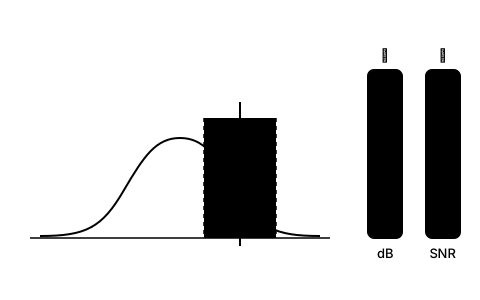
Every receiver shows two bars, and they mean different things. Signal strength essentially measures how much power arrives at the input. It reads high even when the LNB is merely powered and producing noise — so it says almost nothing about whether a satellite has been found.
Signal quality, called SNR or MER depending on the device, measures how cleanly the data can be pulled out of the noise. Only that value decides whether you get a picture. For DVB-S2 a receiver needs roughly 8 to 11 dB; below that the picture freezes, above it runs stable.
Remember the pattern: strength high, quality zero almost always means the dish is missing the satellite or pointing at the wrong one. Strength zero instead means the connection to the LNB is broken — cable, connector or supply voltage.
2Check the chain backwards
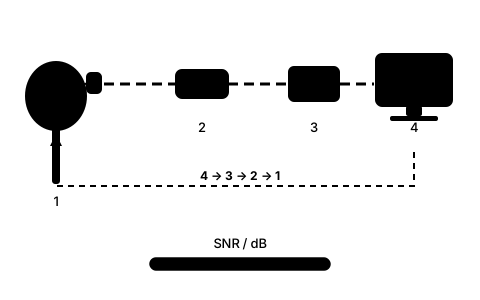
Work from the television towards the dish, not the other way round. First the television itself: right input selected, receiver actually on, remote controlling the right device? A surprising number of outages end here.
Then the receiver: does it show a signal display at all in its menu, or is it in the wrong reception mode, DVB-T instead of DVB-S? Are the LNB frequencies right — 9750 and 10600 MHz for a universal LNB? After a factory reset or a software update these values are occasionally back to defaults.
Then the cabling, and only last of all the dish. One simple cross-test separates upstairs from downstairs: connect the receiver directly to the LNB with a short cable you trust. If signal appears, the fault is in the fixed wiring — not on the roof.
3F-connectors and cable — the single most common cause
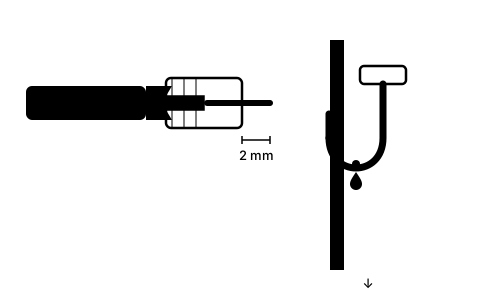
When satellite reception fails after years with nobody having touched anything, it is disproportionately often the outdoor connector. Water works its way into the F-connector over the years, the copper corrodes green, and contact resistance rises far enough for the supply voltage to collapse.
Unscrew the connector at the LNB and look at it. The centre conductor must be bright and straight and stand about 2 mm proud of the connector — too short makes no contact, too long presses against the housing. Verdigris, a splayed braid or a single stray strand touching the centre conductor are all reasons to fit a new connector.
Check the cable itself too. A bend radius that is too tight, a kink from a door frame or a marten bite in the loft change the characteristic impedance permanently. In the readings that looks like bad weather, only on a sunny day.
4If no quality appears at all: is the alignment still right?
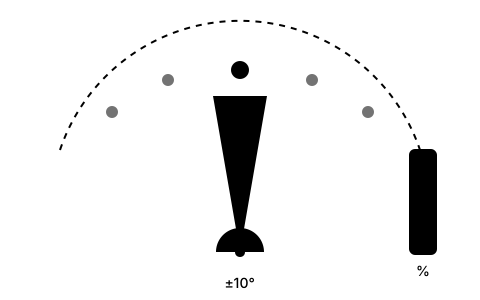
Only when the chain downstairs is clean is the trip upstairs worth it. Dishes move less often on their own than people assume, but it happens: a storm, a ladder against the mast, a mast clamp that loosened after the first winter.
Check first whether the values still match the site at all. The table shows the target values for a few cities; for your address the SatFinder App works out azimuth, elevation and skew exactly. If the dish is more than a degree out, on an 80 cm dish that is already half the usable window.
Then search in small steps. Loosen the azimuth bolts only enough that the dish turns with effort, and sweep slowly — about one degree every two seconds. The receiver needs that time to show a signal it has found at all. Sweep fast and you pass the satellite without ever seeing it.
| Location | Azimuth | Elevation | Skew |
|---|---|---|---|
| London | 145.4° | 25.4° | 13.2° |
| Birmingham | 143.8° | 23.8° | 13.6° |
| Manchester | 143.8° | 22.9° | 13.1° |
| Dublin | 139.5° | 21.4° | 15.3° |
5If it only drops out sometimes: weather and time of day
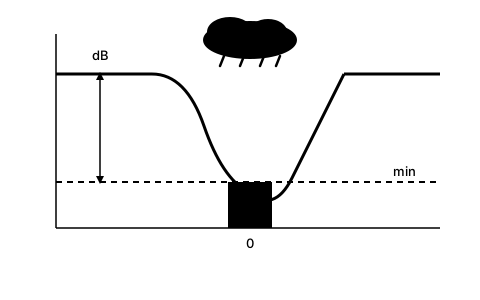
Dropouts that come and go are rarely a defect. The most common is rain fade: water droplets absorb the Ku band, and your reception loses exactly the margin it had above the threshold. A properly aligned installation has several decibels of headroom and rides out a shower; a marginally aligned one fails in every rain.
Wet snow on the reflector is worse than rain, because it detunes the surface itself. Coatings help little — sweeping it off helps. Conversely, twice a year around the equinoxes there is sun outage: for a few minutes the sun stands directly behind the satellite and drowns it out. It affects every viewer at once and is over in minutes.
If your reception breaks up in light drizzle, the installation is not broken, it is too marginally adjusted. What helps then is not hunting for a defect but a clean fine-tune on signal quality.
6If only individual channels are missing
If most things work but certain programmes do not, the installation is fundamentally fine. If a whole group is missing, check polarisation first: if all horizontal channels are gone while the vertical ones run, the LNB is no longer switching the 18-volt plane — either the power supply is not delivering it or the LNB has failed.
If instead individual channels are missing with no discernible pattern, the channel scan is usually out of date. Broadcasters change transponders, and a scan from two years ago does not know the new data. A rescan with an updated transponder list is quicker than any hardware fault-finding.
And if one polarisation plane is merely weak rather than absent, the LNB skew is often off. That typically hits installations someone aligned by feel, which have dropped one plane first in rain ever since.
Frequently asked questions
Why is my TV not finding the satellite?
In most cases it is not the dish. Check in order: right input on the television, receiver in DVB-S mode, LNB frequencies set to 9750/10600 MHz, F-connectors at LNB and receiver tight and dry. Only when signal strength is present but quality stays at zero is the dish genuinely pointing wrong.
What is the difference between signal strength and signal quality?
Strength measures how much power arrives at the input — it reads high even when the LNB is only producing noise. Quality (SNR) measures how cleanly the data can be recovered from the noise, and only that decides whether you get a picture. For DVB-S2 a receiver needs about 8 to 11 dB.
How can I test my satellite reception?
The receiver's own signal display covers almost every fault: it sits in the installation or antenna menu and shows strength and quality. You only need a meter when you are adjusting at the mast and cannot see the display. For the target values at your location the SatFinder App calculates azimuth, elevation and skew.
Why do I lose the signal when it rains?
Raindrops attenuate the Ku band. A cleanly aligned installation has several decibels of margin above the threshold and rides out a shower; if reception fails in light rain the alignment is too marginal. That is not a defect but an adjustment error.
All the HD channels are missing but the others work — why?
If a whole polarisation plane is missing, the LNB is not switching the 18-volt plane: either the power supply is not delivering it or the LNB has failed. If instead individual channels are missing with no pattern, the channel scan is simply out of date because broadcasters changed transponder.
Do I have to go on the roof to fix this?
Only if the chain downstairs is demonstrably fine. Connect the receiver directly to the LNB with a short, known-good cable: if signal appears, the fault is in the fixed wiring and not the dish. In practice this test saves most trips onto the roof.